THE SHORT ANSWER
What matters most.
Build interior design marketing around real projects and the questions a prospective client asks before hiring a studio. Show the brief, design choices, scope and your team’s role; use original images with permission and mark concept renders as concepts. Create useful project pages with clear service and location details, maintain an accurate Google Business Profile if eligible, and use social platforms to show process as well as finished spaces. Give visitors a simple consultation path and measure qualified enquiries, meetings and signed projects—not just likes or traffic. These practices can support discovery and trust, but do not guarantee rankings, leads or sales.
QUICK REFERENCE
Key takeaways.
- KEY POINT 01Position the studio around real strengths, project types, service scope and coverage.
- KEY POINT 02Turn each portfolio project into a story about the brief, decisions and the work delivered.
- KEY POINT 03Use original images you are allowed to publish and label concept visuals accurately.
- KEY POINT 04Build project pages that help clients compare the service instead of repeating location keywords.
- KEY POINT 05Use local search, visual social content, video and referrals for their different roles.
- KEY POINT 06Measure qualified enquiries, consultations and projects—not only likes, views or site visits.
POSITIONING / MAKE THE FIT CLEAR
Position the studio around the work you want
“Interior designer in Mumbai” is a useful starting phrase, but it does not tell a prospective client whether the studio is a fit. Describe the work you actually take on: homes, apartments, offices, retail spaces, renovations, styling or another real specialty. Explain which parts of a project you handle, which areas you serve and how a first consultation works.
Make the position specific enough to help people decide. A person planning a compact apartment renovation needs different information from a business planning an office fit-out. If you serve a defined budget or project range, describe it honestly so the enquiry and the studio’s capacity are more likely to match.
Use the same core language across the website, portfolio and social profiles. Avoid unsubstantiated labels such as “best studio” or claims about awards, years of experience, savings or project results unless there is evidence that supports them.
- Name the project types and services the studio really accepts.
- Describe genuine service coverage and any important project constraints.
- Explain the first step, from consultation through proposal or site visit.
- Use the studio’s real business name consistently across public profiles.
PORTFOLIO / TELL THE WHOLE PROJECT
Turn each project into a story clients can evaluate
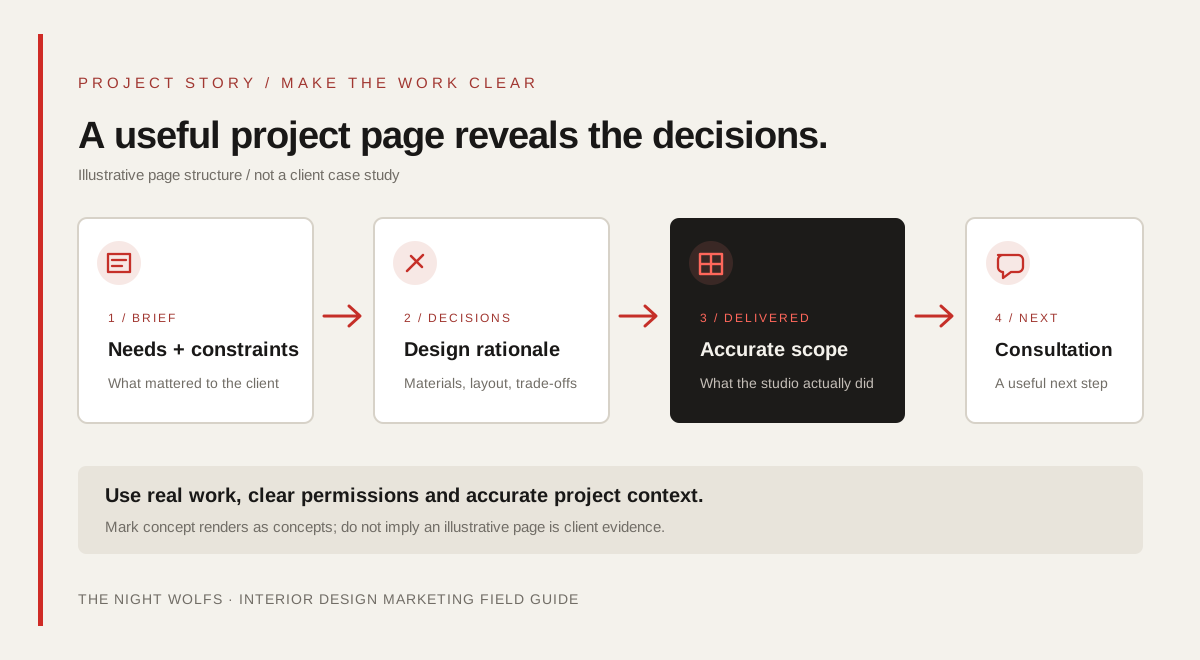
A portfolio image shows the room; a project story explains how the work happened. Start with the brief and the client’s priorities. Add the practical constraints that shaped the design—such as the existing layout, storage needs, material availability, maintenance preferences or an agreed scope—only when they are true for that project.
Describe the decisions and the studio’s contribution. Say what was designed, specified, coordinated or delivered, and distinguish your work from that of contractors, architects, suppliers or the client. A reader should not have to guess whether an image shows a completed client project, a visualization, a mood board or a concept proposal.
Use photographs, drawings and testimonials only when the studio has the rights and permission to publish them. Remove private details from residential images and captions. If you use a before-and-after comparison, keep the context honest and avoid editing that changes the impression of the actual space.
The diagram is an illustrative page structure, not a Night Wolfs client project or a performance result.
WEBSITE / MAKE PROJECTS FINDABLE
Create a useful page for each meaningful project
When a project has distinct information, give it a readable page with a clear title, an introduction and sections that explain the space, brief, design choices and scope. Add a location only when it describes the real project or service area. Avoid generating dozens of nearly identical pages that swap one Mumbai neighbourhood name for another but provide no new information.
Place each image near the text that explains it. Use descriptive alternative text for images that carry information, such as “custom oak storage wall in a compact Mumbai apartment”; describe what the image shows rather than repeating search phrases. Decorative images can use empty alternative text. Use helpful captions and readable filenames, compress large photographs and provide suitable image dimensions so the page remains usable on a phone.
Link project pages to the relevant service explanation, consultation page and a few related projects. Google’s SEO guidance recommends making important pages discoverable through crawlable links and creating content for visitors. Internal links should help a client explore—not merely increase the number of links on the page.
- Use distinct project pages only when there is meaningful project information to share.
- Keep image alt text accurate and concise; do not stuff it with keywords.
- Check page titles, image sizes, mobile loading and contact links before publishing.
- Link from projects to the service or consultation that best matches the work.
LOCAL SEARCH / REPRESENT THE STUDIO
Make the studio easy to find without inventing locations
If the studio is eligible for a Google Business Profile, keep its public name, category, contact details and service information accurate. Google says the profile name should match the real-world business name. Do not add “interior designer Mumbai” to the name unless those words are actually part of the business’s real name.
A physical studio should use a location it genuinely operates from and can represent according to Google’s current guidelines. A virtual office or an unstaffed address is not a substitute for a real customer-facing location. If the business serves clients at their homes and does not receive customers at its own address, review the current service-area profile rules and configure the profile accordingly.
Ask clients for honest feedback after a project, but do not buy reviews, offer a reward for a positive rating or pressure a client to remove fair criticism. Respond professionally and avoid revealing private project details in a public reply. A profile is one discovery channel; it does not replace strong project pages or a trustworthy service experience.
- Use the exact real-world business name and a small number of accurate categories.
- Show a studio address only if the location meets current profile eligibility rules.
- Keep phone, website, hours and genuine service coverage current.
- Invite honest reviews without incentives or scripts that dictate the rating.
CHANNEL MIX / EACH PLATFORM HAS A ROLE
Match visual channels to client intent
Visual discovery and active search can support the same studio in different ways. Social content can help someone notice a style or understand a design process. A local search result or a well-matched project page can help someone who is already comparing studios. A referral can provide context and confidence that an ad alone cannot.
Use the table to assign each channel a practical job. It is a planning tool, not a performance benchmark: results depend on the project offer, audience, creative, service area, budget and follow-up.
| Channel | Useful role | Example content or destination |
|---|---|---|
| Google Search and SEO | Answer an active request for a designer, service or project type. | A detailed service page or relevant project story. |
| Google Business Profile | Help clients find and contact an eligible real studio. | Accurate profile details, genuine images and a working website link. |
| Instagram and Pinterest | Show visual direction and help people explore ideas. | Original project images, material details and process-led posts. |
| YouTube or short video | Explain choices and give context a still image cannot. | A room walkthrough, design rationale or project-stage update. |
| Referrals and partnerships | Reach clients through trusted professional relationships. | A clear portfolio link and an accurate description of your role. |
| Paid campaigns | Test a specific project offer or consultation with a relevant audience. | A focused landing page, transparent scope and measurable enquiry path. |
CONVERSION / MAKE THE NEXT STEP SIMPLE
Design a consultation path that sets expectations
A strong portfolio should make the next step obvious. Offer one primary action, such as booking an initial discussion or requesting a project consultation. Explain what the first conversation covers, whether a site visit is included, what information the client should prepare and when the studio will respond.
A dedicated consultation page can answer practical questions before someone shares their details. Explain project types, service areas, process stages, indicative scope or fee approach where the studio can do so accurately. Avoid implying that every project is available immediately or that an estimate is final before the brief is understood.
Keep the path accessible on mobile: the contact action should be easy to find, forms should have labels, and confirmation should say what happens next. Test the form, phone link and email destination after every site change.
ENQUIRY / HELP THE RIGHT TEAM RESPOND
Ask enough to understand the project—then follow up
A concise enquiry form can ask about the project type, general location, stage, rooms or space involved, desired scope and approximate timeline. A budget range can help the studio understand fit, but explain why it is being requested and make it optional when possible. Do not request sensitive documents or detailed personal information before there is a clear reason.
Tell visitors how the studio will use their contact details and who may respond. Route enquiries to a named team member or a monitored inbox, set an achievable response expectation and create a fallback for periods when the usual contact is unavailable. A form that submits successfully but goes unread is not a working lead process.
Record a few useful stages, such as new enquiry, discussion booked, proposal sent, project agreed or not proceeding. Note the original source where consent and analytics settings allow, and keep the actual client conversation in the studio’s approved system rather than exposing private details in tracking URLs.
MEASUREMENT / FOLLOW THE PROJECT JOURNEY
Measure consultations and project fit, not just attention
Track useful steps from the first visit through the studio’s sales process: relevant project-page visits, consultation requests, qualified discussions, proposals and projects accepted. Agree on what counts as a qualified enquiry and keep the definition consistent when comparing campaigns.
Use Search Console to understand which search queries and pages receive impressions and clicks. Use consent-aware website analytics to review opted-in journeys, and tag campaign links consistently. Platform attribution may not capture a referral, phone call, later visit or conversation that moves between devices, so combine digital reports with the studio’s own enquiry records.
Review the quality of the work as well as the count of enquiries. If people misunderstand the scope, location or budget fit, improve the page and message before expanding spend. Do not treat likes, impressions or an increase in traffic as proof of a signed project or a guaranteed return.
| Signal | What it helps you ask |
|---|---|
| Search impressions and clicks | Are relevant project and service pages appearing for useful searches? |
| Consultation requests | Do visitors understand the next action and complete it? |
| Qualified discussions | Do the project type, timing, area and scope match the studio? |
| Proposals and accepted projects | Which enquiries progress into real business outcomes? |
ACTION PLAN / A PRACTICAL FIRST MONTH
Use a four-week plan to strengthen discovery
Start with the work and pages the studio can keep accurate. A focused month of cleanup and learning is more useful than launching every channel with unfinished portfolio details.
- Week 1: define studio positioning, service scope, client questions and image permissions.
- Week 2: improve one service page and publish two complete project stories.
- Week 3: check the eligible local profile, mobile enquiry path and channel tracking.
- Week 4: review search queries, consultation quality and follow-up; choose one improvement to test next.
- Keep a simple record of page, creative, budget and offer changes so comparisons have context.
This is a practical sequence, not a promise of first-page rankings, enquiries or a particular sales result. Choose a pace the studio can maintain.
THE DETAILS
Questions worth
asking early.
Clear answers about interior design marketing in mumbai before you choose your next step.
How can an interior designer get clients in Mumbai?
Start with a clear studio position, original project stories and a simple consultation path. Use accurate local information, service pages and visual content to help people understand the work, then follow up consistently. The best mix depends on the studio’s project type, coverage, capacity and client journey.
What should an interior design portfolio website include?
Include project pages that explain the brief, design choices, scope, actual team contribution and relevant images. Add service details, genuine coverage, contact options and a clear first step. Label concept renders and completed projects accurately.
Should interior designers use Instagram or Google Search?
They serve different jobs. Instagram can help show visual direction and process, while Search can reach people actively looking for a studio or service. Compare them using relevant enquiries and consultations rather than assuming one channel is always best.
How should interior design studios use project photos?
Publish only images the studio has permission to use. Give each important image accurate alternative text and nearby context, keep files reasonably sized, and identify concept visuals, renderings and completed work clearly.
Can marketing guarantee an interior design studio first-page rankings?
No. Search visibility depends on many factors, and no content, profile or campaign can guarantee a particular ranking, lead count or sale. Focus on accurate information, useful project pages, genuine local details and measurement that supports better decisions.